Standardising Floodplain Monitoring Across 1,400 NSW Sites
Floodplain harvesting is the capture and use of water flowing across a floodplain, an important source of water for industry across rural NSW. It's the last substantial water capture method to be licensed in a given basin, with an explicit aim of fair use for this critical and politically sensitive resource.
Parasyn was selected by the Department of Planning, Industry and Environment (DPIE) to lead the floodplain initiatives needed to make sure information about capacity and water usage was reliable and fit for purpose, taking on the role of Consultant, Project Director, and Type Tester.
Stakeholder Engagement as the Biggest Risk
The most significant risk to the DPIE Flood Plains Capacity Management System project was stakeholder engagement. The right planning, pre-workshop engagement, and sharing of materials maximised the outcomes of establishing clear requirements, leading to defined scope and mitigating issues with real potential for significant impact.
“Parasyn collaborated really well with everyone.”
Workshops sit at the heart of a consultant's toolkit, an important way to bring stakeholders together and facilitate collaboration. But without the right people coming prepared, an initiative can reverse direction as quickly as it was planned. Parasyn's behind-the-scenes role facilitated prompt reviews, gathered additional feedback, clarified understanding, and built the relationships that encourage ongoing support, essential for developmental initiatives prone to hiccups and heavy scrutiny.
Blended with DPIE stakeholders, Parasyn's role spanned assessing technologies, assessing vendors, developing installation practices, and codifying the procurement and installation practice required for 1,400 devices across NSW country areas. The primary deliverable was to develop, test, deploy, and share the knowledge needed for others to implement the new standardised design for measuring and monitoring floodplain stored water in real time.
Type Testing at Scale
Proof-of-concept type testing by Parasyn's development engineers covered three data loggers and seven instruments, tested in every viable configuration. Level probes on test included both hydrostatic and radar types. Testing covered performance evaluation, functional assessment, integration testing, specification compliance, and basic operation against DPIE's requirements. Detailed reports gave DPIE the confidence to make a final selection of sensors and confirm its chosen data loggers suited every sensor type, an important outcome given the risk of rolling out the wrong devices across 1,400 sites.
DPIE shortlisted four sites for the live trial. Parasyn selected two of those for testing the three loggers and probes across three storage facilities.
“Parasyn, seamless partnership with Goanna Ag.”
Delivering Through COVID Restrictions
Selecting the right local installer mattered to DPIE, and Parasyn interviewed and selected Goanna Ag from a shortlist of suitable vendors. The initial plan had Parasyn supporting local installation activities directly at the trial sites, but COVID restrictions meant only essential Goanna Ag and DPIE staff could access sites for installation. That shifted the project to closer online collaboration between Parasyn and Goanna Ag, to make sure installation and training materials could be standardised for all 1,400 installations ahead.
Online site monitoring was provided through an existing cloud-hosted SCADA system, with Parasyn preparing recommendations for integrating each logger and sensor option and managing end-to-end testing.
“So many instances of going the extra mile to collaborate with other contractors.”
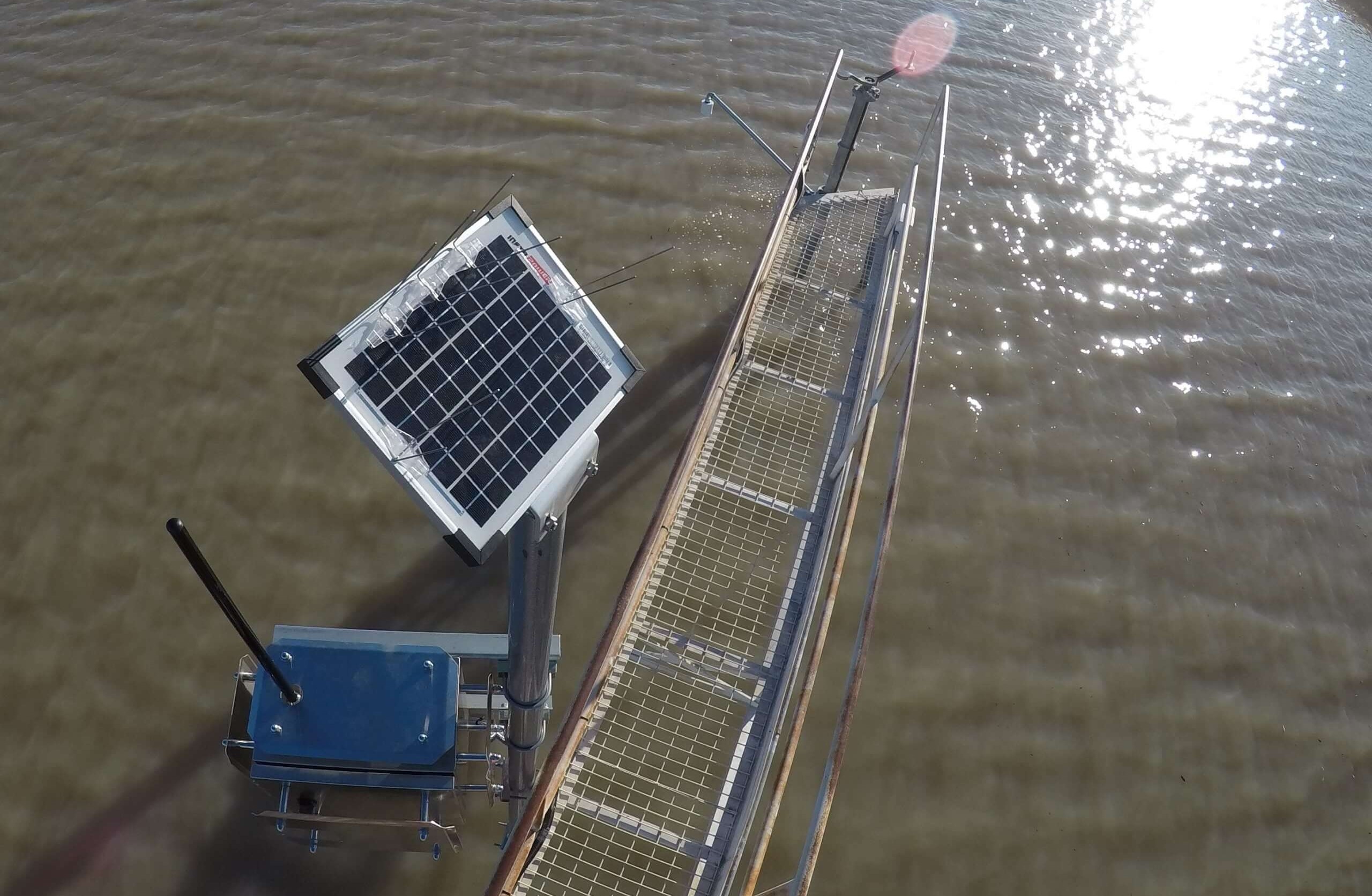
Preparing for site implementation meant working through site conditions and communications in detail. Desktop surveys established baseline RF capability at each test site, with NB-IoT considered the primary communications platform and satellite as the fallback. Site dynamics varied across catwalk, bank, structure-mounted, free-standing, and pontoon installations, with the three trial dams using catwalk and pontoon mounts, though the design caters for most regimes; further testing will be needed for the rest.
Parasyn and Goanna Ag worked together to establish suitable sensors for each sample installation, with Parasyn designing and constructing the instrumentation cabinets, including solar and battery storage. The first enclosure shipped for trial installation in May 2020, and designs and installation guides were fine-tuned after that first site went in. Overall, Parasyn and DPIE were pleased with the results, and Parasyn was given a 5 star rating.